
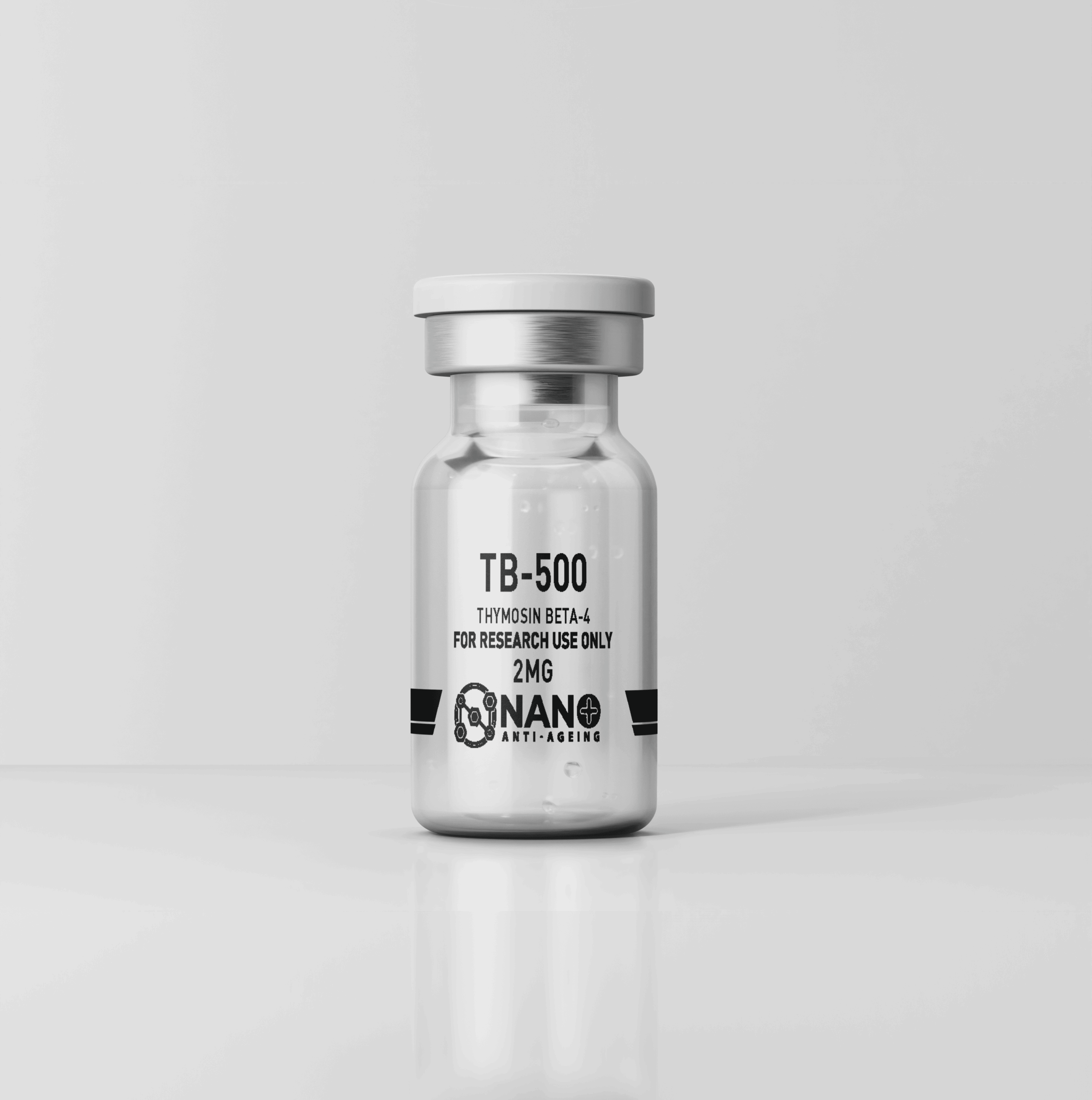
Description
TB-500, or Thymosin Beta-4, is a synthetic peptide derived from the naturally occurring protein thymosin beta-4. This peptide has gained attention for its role in promoting healing and tissue repair, particularly in soft tissue injuries. It acts by enhancing cell migration, facilitating angiogenesis (the formation of new blood vessels), and reducing inflammation, making it a potential treatment option in sports medicine and regenerative therapy (Cushman et al., 2024; Goulian et al., 2025).
Mechanisms of Action
TB-500 exerts its effects through various biological mechanisms that facilitate the healing process. Its primary actions include:
- Cell Migration: TB-500 promotes the movement of cells toward sites of injury, which is crucial for healing. This mechanism aids in aggregating fibroblasts and endothelial cells, essential for tissue repair and regeneration Goulian et al., 2025).
- Angiogenesis: By stimulating the formation of new blood vessels, TB-500 helps ensure that damaged tissues receive the necessary nutrients and oxygen for healing. Increased blood flow supports cellular metabolism and accelerates the repair timeline Goulian et al., 2025).
- Anti-Inflammatory Effects: TB-500 has shown potential in reducing inflammation at injury sites, which can hinder the healing process. This property may benefit chronic injuries or conditions characterized by prolonged inflammatory responses (Cushman et al., 2024; Goulian et al., 2025).
Recommended Dosage and Usage
Dosage: The recommended dosage for TB-500 typically ranges from 2 to 5 mg, administered subcutaneously or intramuscularly. Some users may start with higher initial doses (up to 10 mg) for acute injuries, followed by lower maintenance doses as needed Lindenmann et al., 2022).
Administration Method: TB-500 is commonly administered via subcutaneous or intramuscular injections. Subcutaneous administration tends to be more popular due to its ease of use and effective absorption (Lin et al., 2025; Lindenmann et al., 2022). Users often schedule injections every few days during the initial healing phase, tailoring frequency based on individual response and recovery progress.
Clinical Applications
The applications of TB-500 span several domains, including:
- Soft Tissue Injuries: TB-500 is often employed in treating sports-related injuries, such as tendonitis, ligament sprains, and muscle strains. Athletes may use TB-500 to accelerate recovery from injuries and maintain performance levels Goulian et al., 2025).
- Chronic Wound Healing: TB-500 shows promise in managing chronic wounds by enhancing repair processes. Its ability to promote cell migration and angiogenesis aids in the management of conditions like diabetic ulcers, venous stasis ulcers, or post-surgical wounds Goulian et al., 2025).
- Postoperative Recovery: The use of TB-500 may facilitate recovery after surgical interventions involving soft tissues, aiding in quicker rehabilitation and restoration of functionality post-surgery (Kuroshima et al., 2014).
Safety and Considerations
While TB-500 is generally viewed as safe, its use should be approached with caution, as long-term effects remain under investigation. Potential side effects can include injection site reactions, allergic responses, or effects related to its ability to promote cell migration (Cushman et al., 2024; Goulian et al., 2025). Caution is particularly warranted in individuals with pre-existing medical conditions or those undergoing other treatments.
Conclusion
TB-500 is a peptide with potential applications in regenerative medicine, particularly for enhancing healing and tissue repair. Recommended dosages generally range from 2 to 5 mg, delivered via subcutaneous or intramuscular injections. Its diverse applications in treating soft tissue injuries, chronic wounds, and aiding postoperative recovery underscore its potential therapeutic benefits. Continued research and consultation with healthcare professionals can help ensure effective and safe use of TB-500 in clinical and sports medicine settings.

Reviews
There are no reviews yet.