
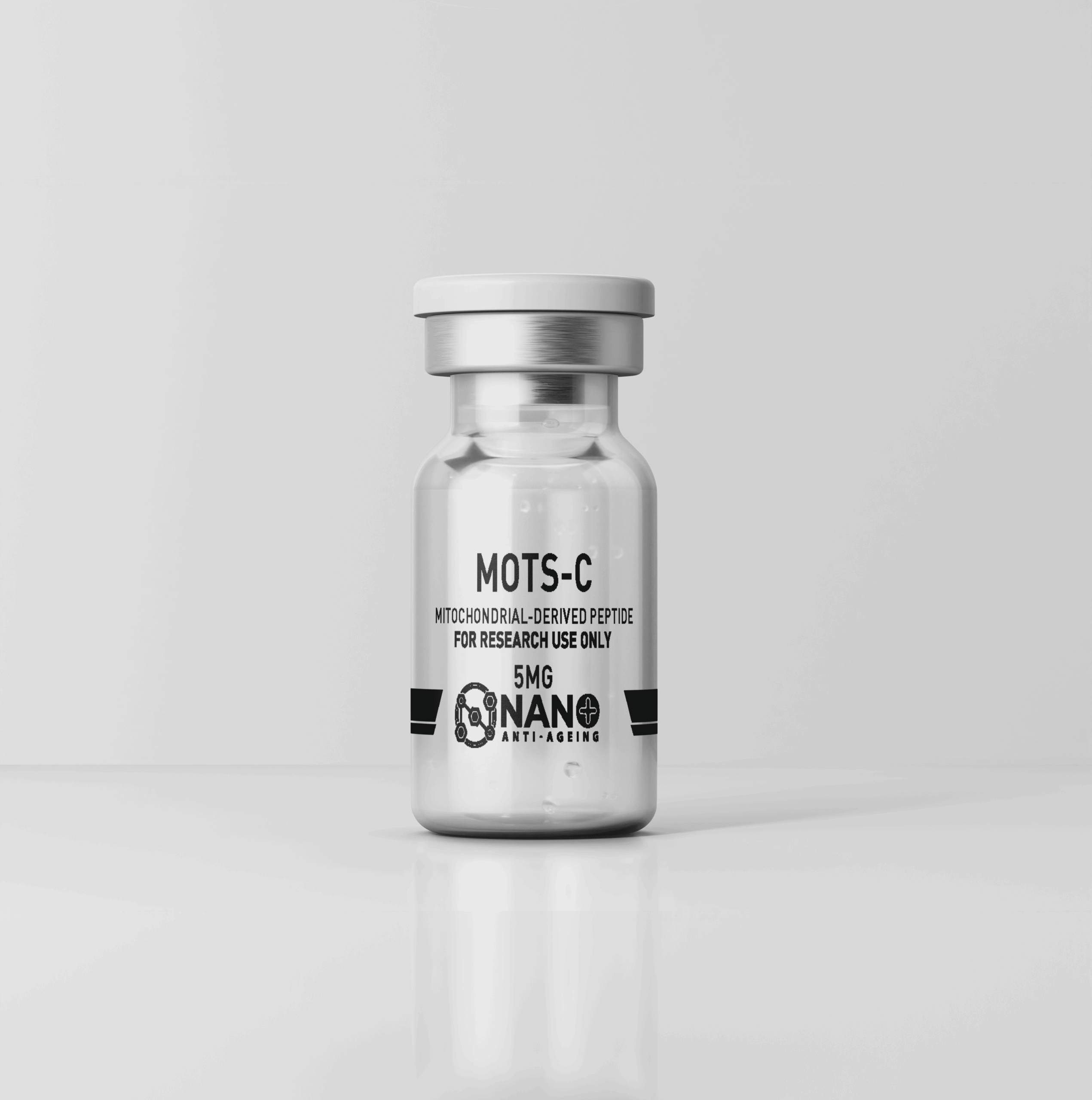
Description
MOTS-c (Mitochondrial Open Reading Frame of the 12S rRNA-c) is a 16-amino acid peptide encoded in the mitochondrial genome that has garnered significant attention for its role in metabolism, insulin sensitivity, and as a modulator of physical stress responses. This peptide is notable for its potential effects on energy metabolism and implications in aging, obesity, and reproductive health (Öztürk et al., 2023).
Recommended Dosage and Usage
Dosage: The recommended dosage of MOTS-c has not been fully established due to limited clinical data; however, emerging studies suggest starting doses around 5 to 10 mg administered subcutaneously once daily as a preliminary approach. Empirical evidence from preclinical models indicates that moderate dosing can induce beneficial metabolic effects without significant adverse reactions (Öztürk et al., 2023)(Jiang et al., 2021).
Administration Method: MOTS-c is typically delivered via subcutaneous injections. This method allows for better absorption and localized action within target tissues, particularly influencing metabolic pathways within muscle and fat tissues (Öztürk et al., 2023).
Clinical Applications: Research has shown that MOTS-c plays a significant role in regulating reproductive hormones. In studies involving obese and non-obese rats, central administration of MOTS-c has resulted in increased levels of gonadotropin-releasing hormone (GnRH), testosterone, luteinizing hormone (LH), and follicle-stimulating hormone (FSH) (Öztürk et al., 2023). The peptide was shown to enhance reproductive hormone levels more significantly in non-obese conditions, indicating its potential application in managing reproductive health, particularly in individuals experiencing hormonal imbalances related to obesity or metabolic disorders.
MOTS-c has also been associated with improvements in insulin sensitivity and reductions in inflammatory responses, potentially making it a candidate for managing metabolic syndromes that commonly affect endocrine functions, including testosterone production in Leydig cells (Jiang et al., 2021). Additionally, due to its mitochondrial role, MOTS-c could be beneficial in interventions aimed at promoting muscle recovery and enhancing metabolic health through mitochondrial biogenesis and function (Jiang et al., 2021).
Safety and Considerations
While initial findings regarding MOTS-c’s effects are promising, more research is needed to establish its long-term safety and efficacy in human populations. As a relatively new therapeutic peptide, appropriate monitoring for potential side effects or metabolic disruptions is advised during usage (Öztürk et al., 2023).
Conclusion
MOTS-c represents a novel peptide with broad applications in metabolic health, reproductive hormone regulation, and potential benefits in enhancing muscle regeneration. Recommended starting dosages typically range from 5 to 10 mg via daily subcutaneous injections, with close monitoring and further research necessary to refine dosage and usage guidelines. As evidence of its therapeutic roles accumulates, MOTS-c may play a pivotal role in addressing complex metabolic and hormonal health challenges.







Reviews
There are no reviews yet.