
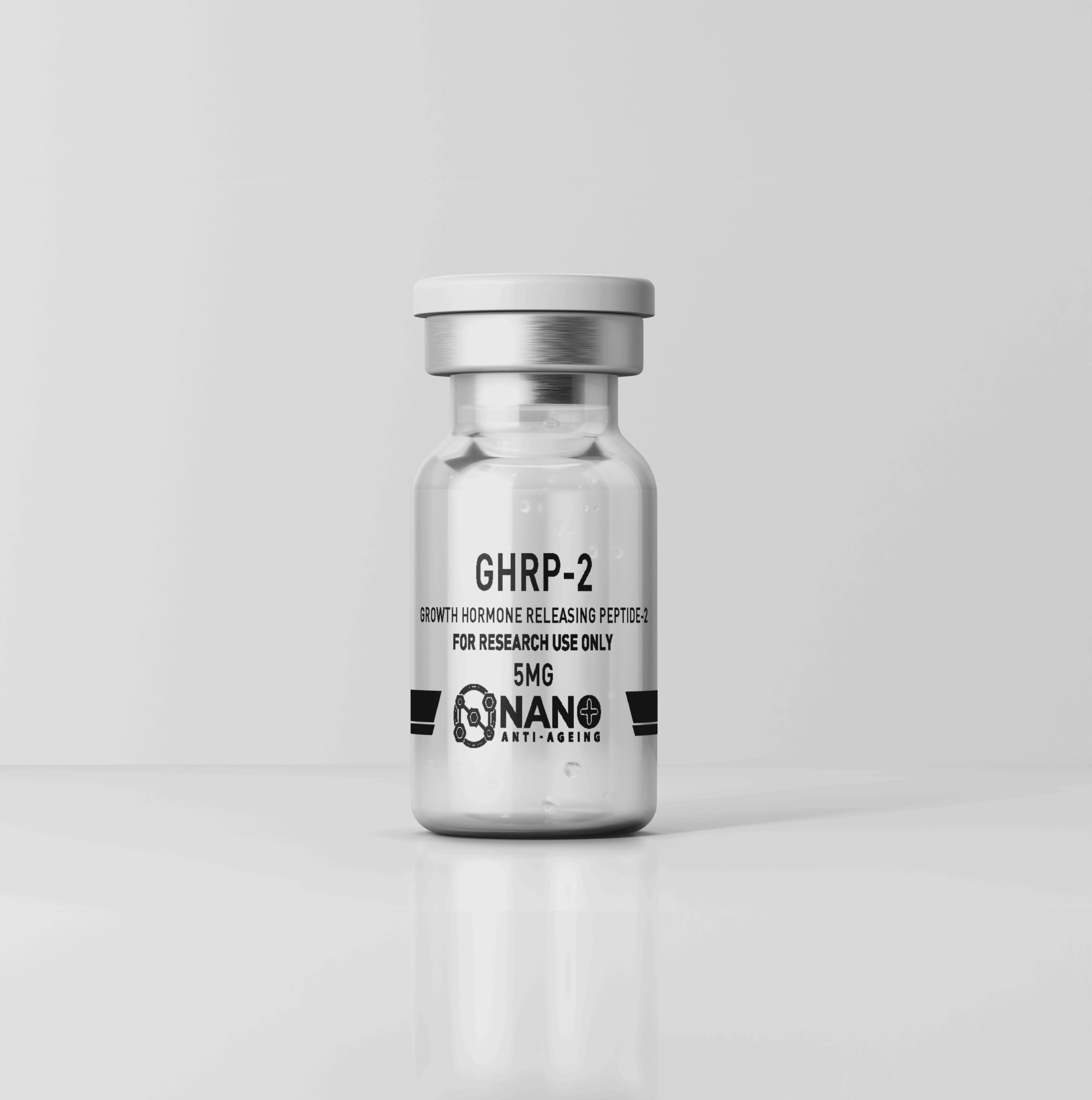
Description
Growth Hormone-Releasing Peptide-2 (GHRP-2) is a synthetic hexapeptide that belongs to a class of compounds known as growth hormone secretagogues (GHS). It is known for its ability to stimulate the release of growth hormone (GH) from the pituitary gland, making it a potential tool in the treatment of growth hormone deficiencies and related conditions (Hu et al. (2016), Yan et al., 2004)).
Recommended Dosage and Usage
Dosage: The dosage range for GHRP-2 varies depending on the treatment protocol and specific patient population. Clinical studies typically use dosages from 100 to 300 micrograms, administered two to three times daily ((Shah et al., 2000; , Sigalos et al., 2017)). In some situations, such as targeted treatments for growth disorders in pediatric populations, higher doses (up to 1 mg per injection) may be utilized ((Shah et al., 2000; ).
Administration Method: GHRP-2 can be administered through subcutaneous or intramuscular injections. Some research has also explored intranasal delivery methods, which may provide additional convenience ((Asakura et al., 2010; , Pihoker et al., 1997)). Subcutaneous administration is generally preferred due to its ease of use and effective absorption.
Clinical Applications: GHRP-2 has demonstrated efficacy in stimulating GH secretion in both children with growth hormone deficiency and adults with various conditions requiring GH supplementation. Notably, it has been used to address hypopituitarism and in clinical trials to evaluate its effects on body composition and anabolic responses in postmenopausal women ((Shah et al., 2000; , Roh et al., 2002)). Additionally, GHRP-2 may enhance muscle protein synthesis and potentially improve recovery after exercise, a factor that has gained interest in sports medicine ((Kageyama et al., 2018; , Granado et al., 2005)).
Research indicates that the combination of GHRP-2 with growth hormone-releasing hormone (GHRH) results in greater increases in GH secretion compared to administering either agent alone. This combinatory approach may be particularly beneficial for populations with reduced GH responsiveness, such as the elderly or patients with chronic illnesses ((Kageyama et al., 2008; , Long et al., 2001)).
Conclusion
GHRP-2 is recognized for its ability to effectively stimulate GH release, with applications in treating GH deficiency and enhancing muscle growth and recovery. Typical dosages range from 100 to 300 micrograms, taken multiple times per day, tailored to individual needs. As with any hormone therapy, close monitoring and customized dosing strategies are essential to optimize outcomes while minimizing side effects. Ongoing research will likely further clarify the therapeutic potential and safety profile of GHRP-2 across diverse populations.

Reviews
There are no reviews yet.